Intercom vs Help Scout for support workflows is a useful comparison for customer support job seekers because it exposes two very different ways modern support teams actually operate.
One leans toward chat, automation, and real-time customer interaction. The other stays closer to structured, email-style ticket handling. Both show up in job descriptions. Both expect you to understand how support flows from customer query to resolution.
The real decision here is not which tool is “better.” Which workflow helps you learn faster, practice better, and speak confidently in interviews?
If you are starting from scratch, this choice affects how quickly you understand ticket triage, conversation handling, and SLA-driven thinking. If you already have some exposure, it shapes how you position yourself in interviews.
Quick Verdict
- Help Scout is the better default for most customer support job seekers because it is easier to understand and more closely aligned with the core logic of support workflows.
- Intercom is better for job seekers seeking exposure to chat-first support, automation, and faster-paced customer interactions.
- Help Scout suits beginners who need to learn inbox management, ticket ownership, and reply discipline without too much workflow noise.
- Intercom suits readers who want to understand how modern support teams combine live chat, bots, routing, and support conversations in one place.
- If your goal is interview readiness, Help Scout is the safer starting point.
- If your goal is market awareness and modern workflow exposure, Intercom gives you a broader view.
Scoring Table
| Criteria | Intercom (1–5) | Help Scout (1–5) | Weight | Weighted Score A | Weighted Score B | Winner |
| *Ease of Learning | 2 | 5 | 2 | 4 | 10 | Help Scout |
| *Practice Value for Beginners | 3 | 5 | 2 | 6 | 10 | Help Scout |
| *Workflow Clarity | 3 | 5 | 2 | 6 | 10 | Help Scout |
| Conversation Handling (Chat vs Email) | 5 | 4 | 1 | 5 | 4 | Intercom |
| Automation Exposure | 5 | 3 | 1 | 5 | 3 | Intercom |
| Real-World Workflow Relevance | 4 | 4 | 1 | 4 | 4 | Tie |
| Free Access / Affordability | 2 | 4 | 1 | 2 | 4 | Help Scout |
| Interview Readiness | 3 | 5 | 1 | 3 | 5 | Help Scout |
| Total | 35 | 50 | Help Scout |
Scoring scale:
1 = Poor / Major limitation | 2 = Below average / Noticeable gaps | 3 = Functional / Adequate | 4 = Strong / Minor limitations | 5 = Excellent / Clear advantage
High-impact criteria (*) are weighted 2× given their importance to this audience.
Teal vs Kickresume for Sales Roles: Which One Helps You Get Hired Faster
Best 5 Tools to Learn CRM for Customer Support Jobs
10 Free Cover Letter Generator Tools for Sales Job Seekers
How to Judge Intercom vs Help Scout for Support Workflows
For customer support job seekers, this is not a feature war. It is a learning decision.
You are trying to understand how support work runs in the real world. Who picks up a conversation? How are replies handled? Where do notes go? How do teams avoid duplicate work? How does a customer issue move from the first message to resolution?
That is why Intercom vs Help Scout for support workflows matters.
One tool gives you a broader look at modern, chat-heavy support. The other gives you a cleaner way to learn the basics of inbox and ticket handling. If you are early in your support journey, that difference matters more than shiny features.
A good tool at this stage should help you do three things well:
- understand the flow of support work
- Practice common actions without getting lost
- Speak about that workflow clearly in interviews
If the tool is too layered, learning slows down. If the tool is too narrow, you miss how modern teams work. So the real question is not which tool is bigger. Which tool helps you become job-ready faster?
Head-to-Head Analysis
Help Scout is easier to learn first.
Help Scout makes more sense for beginners because the workflow is easier to follow.
You open the inbox. You see conversations. You assign, reply, add notes, and move things forward. That sounds basic, but basic is exactly what most job seekers need first.
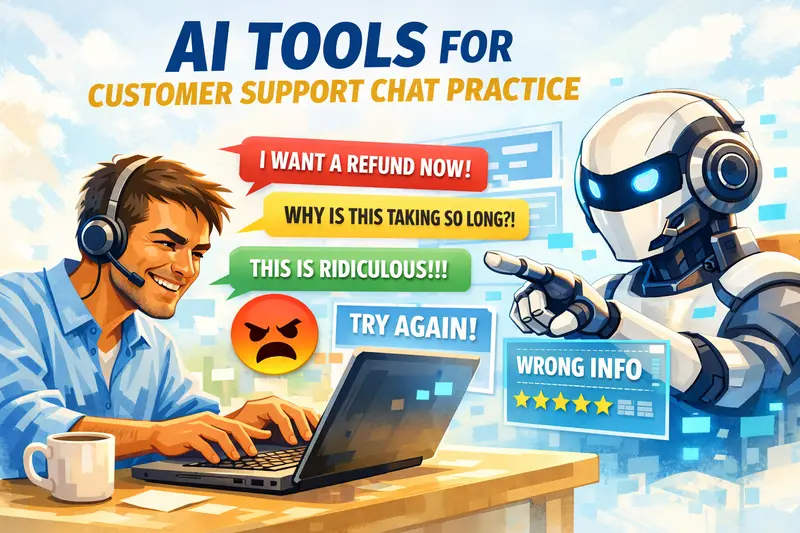
Best AI Tools for Customer Support Chat Practice
It helps you understand the backbone of support work without making you fight the platform.
You start seeing how teams handle shared responsibility. You learn what internal notes are for. You understand why ownership matters. You begin to connect customer replies, status, and follow-up in a way that feels practical rather than abstract.
That makes Help Scout easier to turn into interview language.
You can say:
- I understand shared inbox handling
- I know how internal notes differ from customer-facing replies
- I understand how ownership and handoff work
- I have seen how conversations move through a support queue
That is useful. That sounds real. That is what most hiring teams want from an entry-level candidate.
Intercom gives broader workflow exposure
Intercom is stronger when you want to see how support looks in faster, more modern environments.
It brings in chat, automation, routing, and a more dynamic customer flow. That matters because many SaaS support teams no longer work like old-school email-only desks.
So Intercom gives you better exposure to:
- chat-led support
- automated routing
- faster conversation handling
- bot-assisted flows
- customer interaction that feels more immediate
That wider view is valuable. But for beginners, it can be messy too.
You may see more, but understand less.
That is the problem.
A job seeker can easily leave Intercom impressed by the system without being able to clearly explain the workflow. In an interview, that hurts. You do not get points for saying the platform looked advanced.
You get points for showing that you understand how support actually works.
The real difference is clarity versus range
This is where the comparison becomes simple.
Help Scout is better for clarity. It helps you learn the bones of support work faster.
Intercom is better for range. It shows more of what modern support teams are doing, especially in chat-first environments.
If you are completely new, clarity usually matters more.
If you already understand support basics and want to sound more current, Intercom starts becoming more useful.
That is why Help Scout wins for most customer support job seekers, while Intercom still has value for the smaller group trying to level up from basic workflow knowledge to broader market awareness.
Pricing and Upgrade Impact
Most job seekers do not need deep access to paid resources. They need enough access to understand the workflow.
That is an important distinction.
Many people make poor tool decisions because they think the paid tier will somehow make them more employable. Usually, it does not. Not at this stage.
What matters more is whether the free or lower-access experience still teaches you something useful.
Help Scout offers a better return on investment here because its value is tied to the core workflow. Even a lighter exposure can help you understand inbox structure, collaboration, replies, and conversation management.
Intercom is trickier.
Its real value becomes clearer when you see the larger system working together: chat, automation, routing, messaging logic, and support flow across multiple touchpoints. If you only get a partial view, you may not get the full learning value.
So for a job seeker on a budget:
- Help Scout is easier to justify
- Intercom is easier to admire than to learn fully
- paying for either tool is often less useful than structured practice
In many cases, your money is better spent on practice resources, workflow support, training, interview prep, or writing practice than on unlocking deeper product depth.
So yes, pricing matters. But the real issue is not cheap versus expensive. It is whether the upgrade helps you become clearer and more job-ready. In this comparison, Help Scout gives better value at the learning stage.
Decision Rules
Choose Intercom if you want to understand how modern support teams handle chat, automation, and faster conversation flows.
Choose Help Scout if you want to learn support workflow basics quickly and explain them clearly in interviews.
Choose Intercom if you already know the fundamentals and want broader exposure.
Choose Help Scout if you are still building that foundation.
For most readers searching intercom vs. Help Scout for support workflows, Help Scout is the better default because it is easier to learn from, easier to explain, and more useful for interview preparation.
Intercom is the better edge-case choice for job seekers targeting SaaS-style, chat-heavy support environments and who already have some grasp of how support operations work.
You should also build adjacent skills around workflow language, response quality, and support practice. That is where related posts can help once you add them later.
FAQs
Is Intercom or Help Scout better for beginners in customer support?
Help Scout is better for most beginners because the workflow is easier to follow and easier to explain in interviews.
Does Intercom matter more for SaaS support jobs?
Yes. Intercom is more relevant in many chat-first SaaS environments, especially where automation and handling live conversations matter.
Can I learn support workflows without real job experience?
Yes. You can still learn core workflow concepts like ownership, internal notes, triage, handoff, and resolution logic before getting hired.
Is Help Scout too simple compared to Intercom?
For a beginner, simplicity is a strength. It helps you understand the workflow faster, rather than drowning in extra layers.
Should I learn Help Scout first and Intercom later?
Yes. That is the smarter sequence for most job seekers. Learn the basics first, then move to the more layered system.
Wrap Up
Intercom vs Help Scout for support workflows is really a choice between faster understanding and broader exposure.
For most customer support job seekers, Help Scout is the better starting point because it teaches the core workflow more clearly.
Intercom is worth learning next, not first.